
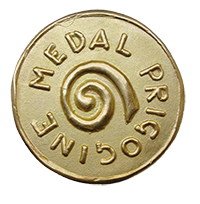
 The Prigogine Award was established by the University of Siena and the Wessex Institute of Technology in 2004 to honour the memory of Professor Ilya Prigogine, Nobel Prize Winner for Chemistry.
Ilya Prigogine
Ilya Prigogine was born in Moscow in 1917 and obtained his undergraduate and graduate education in chemistry at the Free University in Brussels. He was awarded the Nobel Prize for his contribution to non-equilibrium thermodynamics, particularly the theory of dissipative structures. The main theme of his scientific work was the role of time in the physical sciences and biology. He contributed significantly to the understanding of irreversible processes, particularly in systems far from equilibrium. The results of his work have had profound consequences for understanding biological and ecological systems.
Prigogine’s ideas established the basis for ecological systems research. The Prigogine Medal to honour his memory is awarded annually to a leading scientist in the field of ecological systems. All recipients have been deeply influenced by the work of Prigogine.
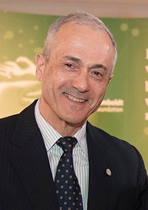 Adrian Bejan
Adrian Bejan is J.A. Jones Distinguished Professor at Duke University. His creative work is in thermodynamics, design in nature, and the science of form, rhythm, and performance. His contributions to thermodynamics include the method of Entropy Generation Minimization and the Constructal Law of Evolution in Nature: “For a finite size flow system (not infinitesimal) to persist in time (to live) it must evolve with freedom such that it provides easier and greater access to what flows.” For the first time, this law unifies the bio and non-bio realms and accounts for the universal phenomenon of directionality (design change, time arrow, objective, purpose). The Constructal Law cannot be deduced from other existing laws. Among Adrian Bejan’s many honors are the ASME Medal (‘the highest honor that the society can bestow’) and the Benjamin Franklin Medal for “Constructal theory, which predicts natural design and its evolution in engineering, scientific, and social systems.” Two dimensionless groups have been named Bejan Number in different fields, Thermodynamics and Heat Transfer. He was awarded 18 honorary doctorates from universities in 11 countries. He is authored over 30 books and 700 peer-reviewed journal articles with over 100,000 citations. MIT education: SB 1971 (Honors Course), SM 1972 (Honors Course), Ph.D. 1975. Recent books: Shape and Structure, from Engineering to Nature (2000), Design in Nature (2012), The Physics of Life (2016), Freedom and Evolution (2020), Time and Beauty (2022), Diversity through Freedom (2026).
Prigogine medal award ceremony and special lecture
The lecture entitled "Diversity, Freedom and Design in Nature" will be delivered by Professor Adrian Bejan at the School of Architecture-PSL (Paris Sciences et Lettres) University during the 16th Constructal Law Conference (CLC), October 12-15 in Paris.
Abstract
"In the beginning was an accident: I read a quote from Churchill (Perfection is the enemy of progress). It intrigued me because it agrees with Constructal Law predictions of design in nature: In evolution, what works is kept. This led me to an unexpected discovery - the physical cause of diversity - and the book Diversity through Freedom (Springer Nature 2026). The physics sheds new light on the diversity that we know but do not question - animal design, athletics, university rankings, merit, hierarchy, convergent with divergent evolution, opinions, and unnatural (coerced) diversity from the class struggle to the Red Terror. The features of diversity shared so clearly by so many dissimilar domains empower the biosphere with the design that sustains it and assures its future. An integral part of nature’s design is the merit system. Diversity emerges naturally, inevitably, steadfastly, and beneficially. Unnatural (coerced) diversity is destined to fade, like all unhelpful ideas, inventions, policies, and laws of nature."
Previous Prigogine Laureates
2004 Sven Jorgensen, Denmark
2005 Enzo Tiezzi, Italy
2006 Bernard Patten, USA
2007 Robert Ulanowicz, USA
2008 Ioannis Antoniou, Greece
2009 Emilio del Giudice, Italy
2010 Felix Müller, Germany
2011 Larissa Brizhik, Ukraine
2012 Gerald Pollack, USA
2013 Vladimir Voeikov, Russia
2014 Mae-wan Ho, UK
2015 Bai-Lian Larry Li, USA
2016 Brian Fath, USA
2017 João Carlos Marques, Portugal
2018 Stuart Kauffman, USA
2019 Luc Montagnier, Switzerland
2020 Diederik Aerts, Belgium
2021 Simone Bastianoni, Italy
2022 Robert Gilmore, USA
2023 Søren Nors Nielsen, Denmark
2024 Filip Meysman, Belgium
2025 Ichiro Aoki, Japan
For further information about the Prigogine Awards, please contact:
Prigogine Award
Wessex Institute
Ashurst Lodge, Ashurst
Southampton
SO40 7AA, UK
Tel: +44 (0) 238 029 3223
Email:
See the following Web pages for details of the recent Prigogine Awards:
Further details of all Prigogine Awards can be found on our dedicated page: Prigogine Award
 Wessex Institute