
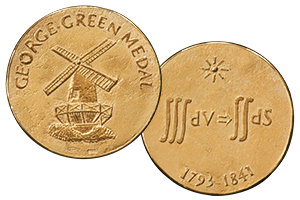
 The George Green Medal was established by the University of Mississippi at Oxford, Mississippi, USA, and the Wessex Institute and is supported by Elsevier. It is in honour of the man who single-handedly set up the basis for the modern Boundary Element Method, among other notable achievements.
The Medal is awarded to those scientists who have carried out original work with practical applications in the field of Boundary Elements and other Mesh Reduction Methods, continuing in this manner to further develop the pioneering ideas of George Green. They are also persons of the highest integrity who, by sharing their knowledge, have helped to establish research groups all around the world. The Medal is given once a year and is presented during the BEM/MRM Conference.
George Green (1793-1841)
George Green was a self-taught genius who mysteriously delivered one of the most influential mathematics and physics works of all time. He educated himself in mathematics and self-published the work “An Essay on the Application of Mathematical Analysis to the Theories of Electricity and Magnetism”. In his very first article, he derived Green’s first, second and third identities, forged the concept of Green’s function, and solved the problem of the electrical potential created by a single charge placed inside a spherical metal shell. The ideas of Green’s function forever changed the landscape of science, as many physics and mathematics problems have been solved using this technique. As Green died early, and his work was discovered only posthumously, it remains a mystery today how Green could produce such a masterpiece without the guidance of a great teacher or school and, in fact, without a formal education. Only recently, due to the advent of powerful computers, has it been possible to take full advantage of Green’s pioneering developments.
2026 George Green Medal Recipient
Dr. Alain Kassab of the University of Central Florida, USA
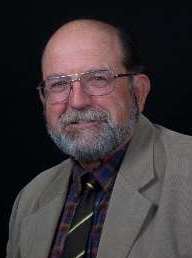
Dr. Alain Kassab is University Trustee Chair Professor and University Pegasus Professor in the Mechanical and Aerospace Engineering Department at the University of Central Florida (UCF). He earned his BS in Engineering Sciences (1982), MS in Mechanical Engineering (1985), and PhD in Mechanical Engineering
(1989) all at the University of Florida. He was a Visiting Assistant Professor at the University of Florida’s Center for Advanced Studies in Engineering (CASE) from 1989-1991. He joined the Mechanical and Aerospace Engineering (MAE) faculty as an Assistant Professor at UCF in 1991. He was the MAE graduate
program coordinator from 1996-2003 and from 2008-2015. Dr. Kassab was appointed Director of the Biomedical Engineering Program in 2015 and launched the MS in Biomedical Engineering Program in 2017 and the PhD in Biomedical Engineering program in 2022. He currently oversees both programs and the BME minor, and he co-directs the Medicine-Engineering Double Degree (MEDD) program at the College of Engineering and Computer Science at UCF. He is recipient of several excellence in teaching and excellence in research awards at UCF, including the 2000 University Graduate Teaching Award. His research work is in the areas of computational methods in heat transfer and fluid flow, boundary elements and meshless methods, inverse problems, and computational methods in cardiovascular hemodynamics with applications to congenital heart disease.
He is editor/co-editor of 11 conference proceedings and co-author of 3 books. He has over 400 scientific publications, including 138 archival journal papers, 268 conference papers, and 9 book chapters. He has supervised 20 PhD and 30 MS theses. His research has been sponsored by the US National Science Foundation, NASA, NIH, the American Heart Association, Orlando Health, Arnold Palmer Children’s Hospital Additional Ventures, The Children’s Heart Foundation, as well as Siemens Energy, Westinghouse, and local industry.
He has organized and chaired/co-chaired over 10 international conferences, including 6 BEM Conferences. Dr. Kassab is Life Fellow of the American Society of Mechanical Engineers, Fellow of the American Institute for Medical and Biological Engineers, Fellow of the American Society of Thermal and Fluids Engineers, and Fellow of the Wessex Institute of Technology. Dr. Kassab is currently editor of Engineering Analysis with Boundary Elements and Associate Editor of Critical Reviews in Biomedical Engineering. He is a member of the editorial board of Computational Thermal Science, International Journal of Computational Methods and Experimental Measurements and several other international journals. He served as associate editor of Inverse Problems in Engineering and Science from 1994-2023.
Keynote Presentation
Following the tradition, Professor Kassab was invited to a medal ceremony during the BEM/MRM 48 conference, 16-18 October 2026, in Dalian, China and to deliver a Keynote Address. Since, however, he is unable to travel due to family reasons, an online presentation will be arranged at this conference.
Previous Laureates
Details of the previous George Green Medal presentations can be found in the conference reports listed below:
- 2014 Carlos A Brebbia, UK - BEM/MRM 37 Conference Report
- 2015 Edward Kansa, USA- BEM/MRM 38 Conference Report
- 2016 Alex Cheng, USA - BEM/MRM 39 Conference Report
- 2017 Antonio Tadeu, Portugal - BEM/MRM 40 Conference Report
- 2017 Henry Power, UK - BEM/MRM 40 Conference Report
- 2018 Ney Dumont, Brazil - BEM/MRM 41 Conference Report
- 2019 Zhenhan Yao, China - BEM/MRM 42 Conference Report
- 2020 Ching-Shyang Chen, USA - BEM/MRM 43 Conference Report
- 2021 Dragan Poljak, Croatia - BEM/MRM 44 Conference Report
- 2022 Luiz Carlos Wrobel, Brazil - BEM/MRM 45 Conference Report
- 2023 Ferri M H Aliabadi, UK - BEM/MRM 46 Conference Report
- 2024 Leopold Škerget, Slovenia - BEM/MRM 47 Conference Report
For further information about the George Green Medal please contact:
George Green Medal
Wessex Institute
Ashurst Lodge, Ashurst
Southampton
SO40 7AA, UK
Tel: +44 (0) 238 029 3223
Email:
 Wessex Institute