
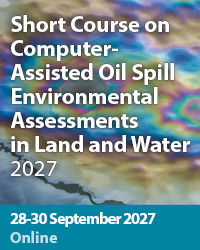
Description
Large volumes of hydrocarbons are transported through pipelines and by ship and are stored in large tanks. These activities pose a continuous environmental risk because of the potential for accidental spills. Understanding the processes that determine oil trajectory and fate, together with the use of oil-spill simulation tools, enables environmental professionals to design more effective response plans and help mitigate future incidents.
This course provides insight into the main processes that govern oil spills on land and in water and offers practical training in using the OilFlow2D computational model. Participants will set up and run a range of scenarios, including pipeline releases affecting sensitive areas, spills in riverine environments and storage-tank failures. They will learn to assess the likely trajectory of the oil and estimate when it may reach different locations within the affected area.
Learning topics:
- Types of hydrocarbons and their characteristics
- Crude-oil property databases
- Behaviour of hydrocarbons in the environment
- Concepts and theories governing the spreading of oil across land and water
- Influence of wind, currents and waves on spreading processes
- Formulations for calculating evaporation, infiltration, emulsification, dispersion, dissolution, shoreline interaction and heat transfer
- Effects of oil-fate processes on viscosity and density
- Use of modelling to support oil-spill preparedness and response
- The OilFlow2D spill-simulation model
- Using oil-spill models for evaluation, planning and decision-making
- Setting up spill scenarios to assess response options
Course Includes:
- A three-month OilFlow2D computer-model licence
- Course presentations
- Videos
- Tutorials
- Comprehensive model documentation
Learning Outcomes:
After completing the course, participants will be able to explain the main processes that determine the fate and trajectory of oil spills and apply the OilFlow2D model to assess spills on land and in rivers and coastal areas.
Course Programme
The course will take place over three days (12 hours total).
Day 1 - Oil Spill Processes
- Introduction, review of training objectives and course agenda
- Types of hydrocarbons and their characteristics
- Crude-oil property databases
- Behaviour of hydrocarbons in the environment
- Concepts and theories governing the spreading of oil across land and water
- Influence of wind, currents and waves on spreading processes
- Formulations for calculating evaporation, infiltration, emulsification and shoreline interaction
- Effects of ambient temperature and heat transfer
- Effects of oil-fate processes on viscosity and density
Day 2 - Model and GIS Setup
- Overview of two-dimensional flood modelling: hydraulics, equations, boundary conditions and numerical methods, including assumptions and limitations
- Introduction to QGIS, a geographic information system
- Introduction to the OilFlow2D QGIS plugin
- Setting up an OilFlow2D project: importing terrain elevations and bathymetry, defining the model boundary, entering boundary conditions, refining the mesh and running the model
- Reviewing and preparing data for a selected project, including file-format requirements and guidelines for reviewing data and modelling results
- Hands-on session: creating and running an overland oil spill using real-world data
- Hands-on session: creating maps and animations
- Hands-on session: developing a simple project from start to finish
Day 3 - Applications and Response
- Hands-on session: creating and running a spill from an oil-storage-tank failure using real-world data
- Hands-on session: creating and running an oil spill in a river using real-world data
- Implementing booms to contain spills on water
- Using OilFlow2D tools to download wind-speed and tidal predictions from online public sources
Course Presenter
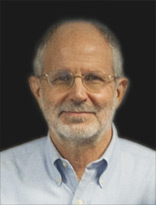
Reinaldo Garcia is an former Wessex Institute of Technology Research Fellow who stayed at Ashurst from 1997 to 1998. He obtained is MSc in Hydraulic Engineering from the Ecole Polytechnique Montreal, Canada and his PhD from the University of Central Venezuela. He is a consultant for the World Bank and the Interamerican Development Bank. Dr Garcia is the creator and leader of the development team of the OilFlow2D and RiverFlow2D, flexible mesh models. He has more than 38 years of experience developing and applying models to simulate oil spills, river flow, and hazard assessments. Dr Garcia has worked in hundreds of modelling projects in the USA, and in more than other 20 countries in Europe, Asia, and South America, and is considered an international expert in the field.
Dr Garcia has taught more than 50 international courses on environmental modelling worldwide. He lectured at the University of Miami, Florida from 2004 to 2006. In 2006 he was appointed Senior Research Scientist at the Applied Research Centre of Florida International University (FIU). Presently Dr Garcia shares his research activities at the Florida International University Institute of Environment with his model development and consulting at Hydronia USA and Hydronia Europe, private firms that commercialize OilFlow2D and other computer models.
Course Requirements
The course does not require previous modelling experience.
This is a hands-on course. To take advantage of the practical sessions it is advisable that participants have the use of a computer with the following minimum specifications.
- Windows 10 or later version operating system
- 4 GB RAM
- Administrative privileges to install the software.
- 1280x1024 or higher screen resolution recommended
- Mouse (recommended)

 Wessex Institute